 Save
Save There's something magical about the smell of vegetables caramelizing in the oven on a gray afternoon. I discovered this soup by accident, really, when I had a fridge full of vegetables that needed rescuing and decided roasting them first would be worth the extra step. That decision changed everything, turning what could have been a forgettable broth into something with actual depth and warmth.
I made this for my neighbor one winter when she was under the weather, and watching her face light up at the first spoonful reminded me that the simplest meals sometimes hit the hardest. She asked for the recipe before I'd even finished the bowl myself.
Ingredients
- Carrots: Two medium ones, peeled and chopped into roughly the same size so they roast evenly and get that gorgeous golden edge.
- Sweet potato: One medium, peeled and diced, bringing natural sweetness that anchors the whole soup.
- Red bell pepper: Seeded and chopped, adding brightness and a gentle sweetness that balances earthier vegetables.
- Zucchini: One chopped, which adds body without overwhelming the other flavors.
- Red onion: Peeled and quartered, becoming almost candy-like when roasted.
- Garlic: Two cloves peeled whole, mellowing beautifully in the oven.
- Olive oil: Two tablespoons for roasting, the foundation of every good flavor here.
- Vegetable broth: Four cups, serving as the canvas for all those roasted notes.
- Dried thyme and rosemary: One teaspoon each, adding herbaceous depth without overpowering.
- Smoked paprika: Half a teaspoon, the secret that makes people ask what that mysterious warm note is.
- Salt and black pepper: To taste, adjusted after blending when you can really judge what the soup needs.
Tired of Takeout? 🥡
Get 10 meals you can make faster than delivery arrives. Seriously.
One email. No spam. Unsubscribe anytime.
Instructions
- Get your oven ready:
- Preheat to 425°F and line a large baking sheet with parchment paper so cleanup becomes someone else's problem later.
- Prepare and season your vegetables:
- Arrange all your chopped vegetables and garlic cloves on the sheet, drizzle with olive oil, and toss everything until evenly coated. Sprinkle the thyme, rosemary, paprika, salt, and pepper over everything and toss once more.
- Let the oven do the work:
- Roast for 30 to 35 minutes, stirring halfway through, until the edges turn golden and caramelized. Your kitchen will smell incredible, so open a window if you have anywhere to be later.
- Combine with broth:
- Transfer the roasted vegetables to a large pot, pour in the vegetable broth, and bring to a simmer over medium heat. Let it bubble gently for about 10 minutes so the flavors start marrying together.
- Blend until silky:
- Use an immersion blender right in the pot to blend until completely smooth and velvety, or carefully work in batches with a countertop blender if you prefer. Stop occasionally to taste and adjust the seasoning.
- Serve with intention:
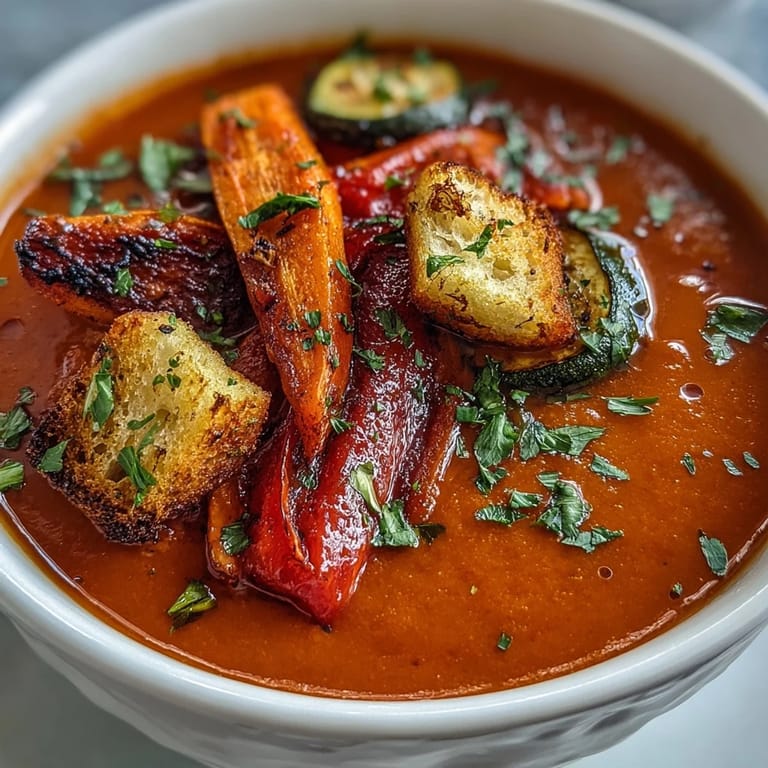
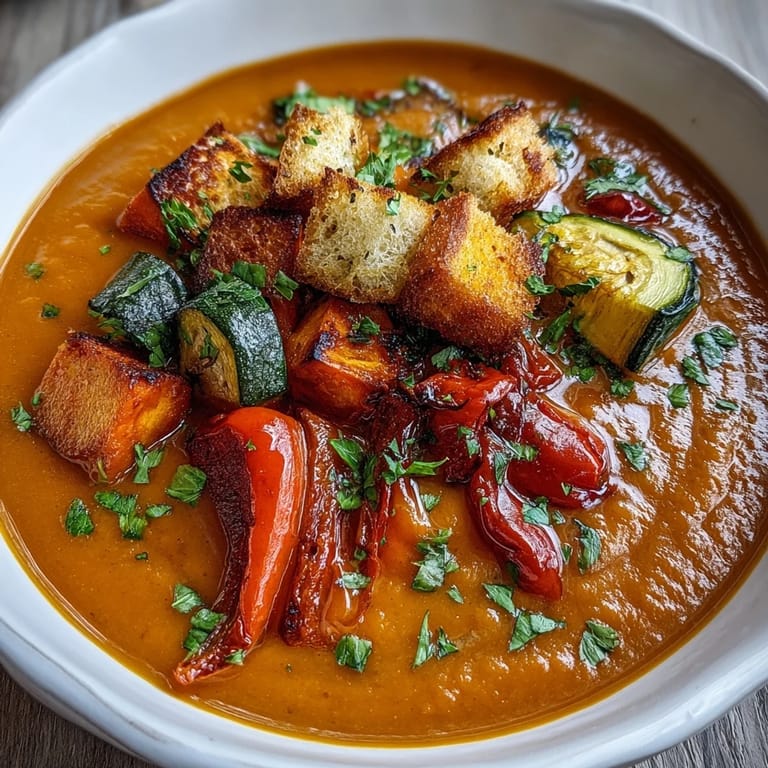
- Ladle into bowls and finish with a scatter of fresh parsley, a drizzle of good olive oil, and croutons or toasted seeds if you want something to bite into.
 Save
Save Years later, I still make this whenever the weather turns or someone needs comfort in a bowl. It reminds me that sometimes the best recipes are the ones that started as solutions to a full vegetable drawer.
The Magic of Roasting
The real transformation happens in your oven during those 30 minutes when the vegetables' natural sugars concentrate and caramelize. You're not just cooking vegetables, you're unlocking flavors that would stay hidden if you simmered them straight in broth. This is why the soup tastes almost sweet without any added sugar, and why people always guess there's cream in it.
Seasonal Swaps and Flexibility
This recipe genuinely loves whatever vegetables are calling to you from the market that week. In autumn I add roasted parsnips or butternut squash, and in summer I've stretched it with tomatoes and eggplant. The core technique stays exactly the same, so you're really just trading one group of flavors for another while keeping that gorgeous roasted depth intact.
Storage and Make Ahead Magic
This soup tastes even better the next day once everything has had time to settle and blend together, making it perfect for meal prep or having something ready when you need it. It keeps for three days in the fridge in an airtight container, and honestly gets better with time as long as you're eating it within that window.
- You can also freeze it for up to three months if you're thinking ahead.
- Reheat gently on the stove with a splash of water if it's thickened, never boiling hard.
- Add your garnishes fresh each time for the best texture and brightest flavors.
 Save
Save Make this soup when you want to feel like you're taking care of yourself and whoever else gets to eat it. It's the kind of simple cooking that tastes like you actually tried.
Recipe FAQs
- → Can I use different vegetables in this soup?
Absolutely! Feel free to substitute with any seasonal vegetables like parsnips, butternut squash, leeks, or cauliflower. Just ensure they're cut into similar-sized pieces for even roasting.
- → How do I make the soup creamier?
For a richer, creamier texture, stir in a splash of coconut milk, heavy cream, or cashew cream before blending. Start with 2-3 tablespoons and adjust to your preference.
- → Can this soup be made ahead of time?
Yes! This soup stores beautifully in the refrigerator for up to 3 days in an airtight container. You can also freeze it for up to 3 months. Reheat gently on the stovetop.
- → Why roast the vegetables instead of just boiling them?
Roasting caramelizes the vegetables' natural sugars, creating deep, complex flavors that simple boiling cannot achieve. This technique adds a subtle sweetness and smoky depth to the final soup.
- → Do I need an immersion blender for this soup?
No, a countertop blender works equally well. Just blend in batches and be careful with hot liquids. An immersion blender is simply more convenient for blending directly in the pot.
- → What can I serve with this soup?
This soup pairs wonderfully with crusty bread, garlic toast, or a simple green salad. Top with croutons, toasted seeds, or a dollop of yogurt for added texture and protein.