 Save
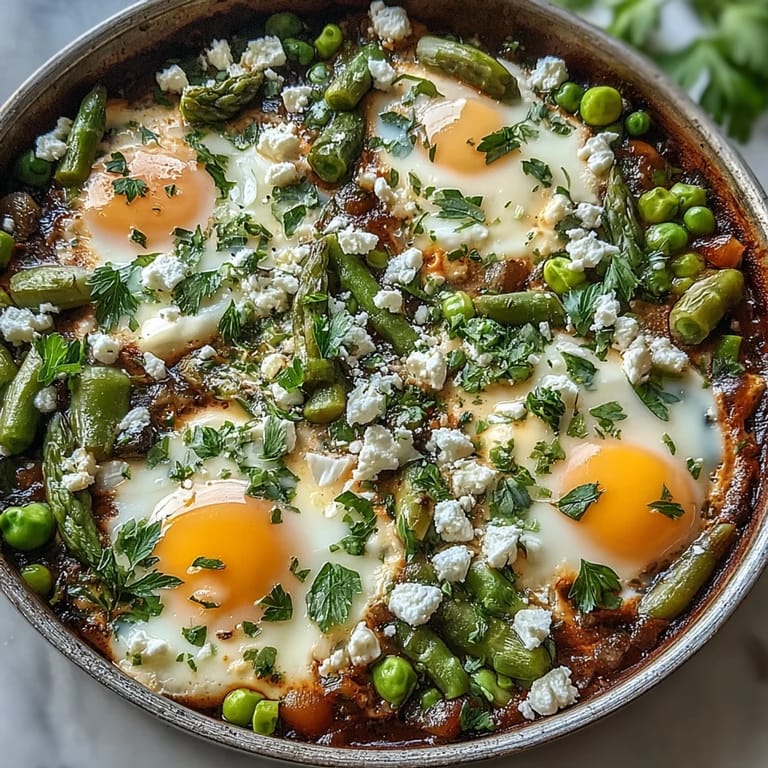
Save Spring arrived late one year, and I found myself staring at a farmers market haul of impossibly bright peas and asparagus, wondering how to make something feel celebratory rather than routine. That's when shakshuka came to mind—not the traditional red pepper version, but something greener, fresher, alive with the season itself. The eggs would nestle into a sauce that tasted like spring had been gently simmered into submission, and somehow that felt exactly right.
I made this for my brother's surprise birthday dinner, and watching him dig into the pan with a piece of warm flatbread, yolk running everywhere, made me realize this dish has a quiet generosity to it. There's something about sharing food directly from the skillet that erases formality—everyone becomes equal in their hunger and joy.
Ingredients
- Fresh or frozen peas: Use frozen if fresh aren't available; they're frozen at peak ripeness and thaw beautifully, keeping their bright sweetness.
- Broad beans: If using fresh, the double-podding is worth the effort for their tender, buttery texture, though frozen work just as well.
- Asparagus: Cut into 2-inch pieces so they cook evenly with the other vegetables and don't overshadow the delicate sauce.
- Onion and red bell pepper: The soffritto base that builds flavor; don't rush the sauté or you'll miss the caramelization that deepens everything that comes next.
- Garlic: Minced finely so it disperses throughout the sauce rather than existing in aggressive chunks.
- Chopped tomatoes: Canned are reliable year-round; use San Marzano if you can find them, as they have fewer seeds and a cleaner taste.
- Tomato paste: This concentrated umami bomb transforms a simple tomato sauce into something with backbone and depth.
- Ground cumin: Warm and earthy, it whispers rather than shouts, letting the vegetables remain the star.
- Smoked paprika: Adds a subtle depth that makes people ask what that flavor is—it's the secret ingredient.
- Ground coriander: A lighter spice that bridges cumin and the fresh herbs, creating complexity without heaviness.
- Chili flakes: Optional, but a pinch adds a gentle warmth that complements the eggs perfectly.
- Eggs: Large, room temperature if possible, so they cook gently and evenly into soft, runny yolks.
- Feta cheese: Crumbled loosely so it sits in pockets throughout the dish rather than melting into a uniform layer.
- Fresh parsley or mint: Mint adds brightness and a slightly cooling effect that feels spring-like; parsley is more familiar and grounding.
- Extra virgin olive oil: The final drizzle transforms the entire dish, so use one you actually enjoy tasting.
Tired of Takeout? 🥡
Get 10 meals you can make faster than delivery arrives. Seriously.
One email. No spam. Unsubscribe anytime.
Instructions
- Blanch the beans and peas:
- Bring a pot of salted water to a rolling boil and slip in the peas and broad beans for exactly 2 minutes—this keeps them vibrant and tender rather than dull and soft. Transfer them immediately to an ice bath with a slotted spoon, which stops the cooking and sets their color.
- Build your base:
- In a large, deep skillet, heat olive oil over medium heat and add the chopped onion and diced red bell pepper, letting them soften and turn translucent over about 5 minutes. You want them to collapse slightly but not brown; this is where the sweetness begins.
- Bloom the spices:
- Add the minced garlic, cumin, smoked paprika, coriander, and chili flakes, stirring constantly for about 1 minute until the kitchen fills with a warm, toasty aroma. This step transforms raw spices into something integrated and sophisticated.
- Create the sauce:
- Stir in the tomato paste first, letting it cook into the oil and vegetables for a minute, then add the chopped tomatoes and let everything simmer gently for 10 minutes, stirring occasionally. The sauce will darken slightly and lose its raw tomato taste, becoming something deeper and more developed.
- Add the spring vegetables:
- Gently fold in the blanched peas and broad beans along with the cut asparagus pieces, then season carefully with salt and pepper, tasting as you go. Simmer for another 5 to 7 minutes until the asparagus is tender but still has a slight bite.
- Nestle in the eggs:
- Create four small wells in the vegetable mixture by gently pushing the vegetables aside with the back of a spoon, then crack an egg into each well. Cover the pan and reduce heat to low, cooking for 7 to 10 minutes until the whites are set but the yolks still jiggle when you gently shake the pan.
- Finish and serve:
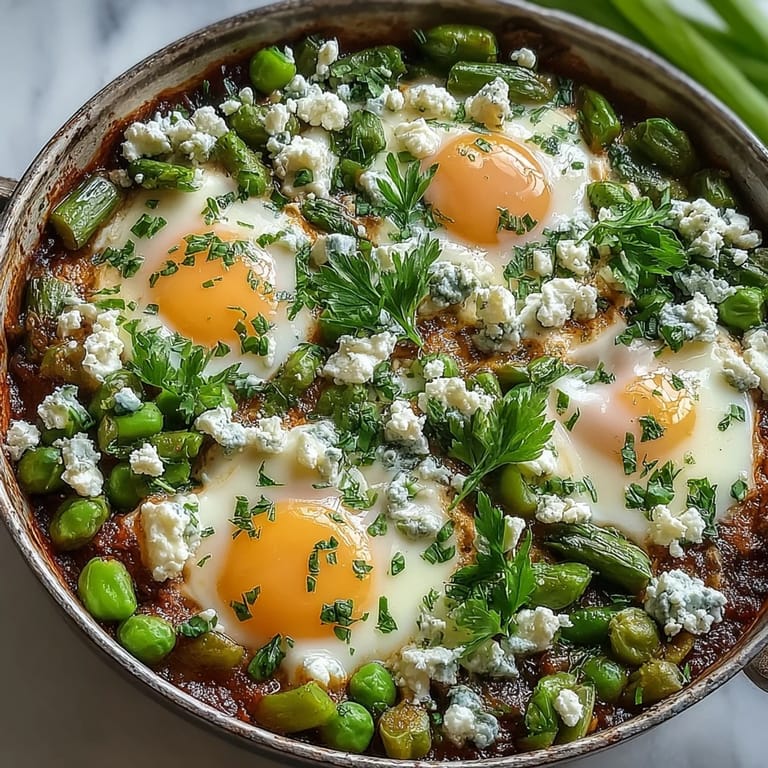
- Remove from heat and scatter the crumbled feta and fresh herbs over the top, finishing with a generous drizzle of your best olive oil. Serve directly from the pan with crusty bread or flatbreads for soaking up every bit of sauce and yolk.
 Save
Save 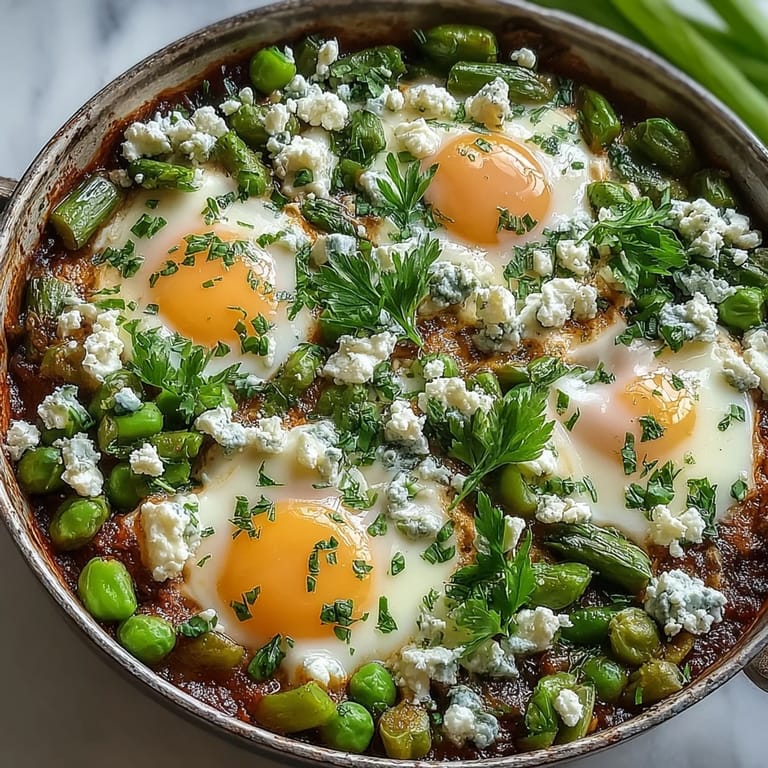 Save
Save There was an evening when I made this for a small gathering on my back porch, and as the sun dropped lower, the sauce caught the golden light and everything looked like a painting. Someone said it tasted like springtime, and I realized that food isn't just about nutrition or even flavor—it's about capturing a moment and sharing it.
Why Eggs Matter Here
The eggs aren't a garnish or an afterthought in this dish; they're the transformation point. That runny yolk breaking into the sauce creates an emulsion that coats your bread and vegetables in something richer and more luxurious than the sauce could achieve alone. It's the moment when a beautiful vegetable dish becomes something you crave.
Variations That Work
This recipe is flexible in ways that matter. If broad beans aren't available or if you're in a season when fresh peas are impossible, use what your market offers—green beans, zucchini, or even artichoke hearts will create something equally delicious, just slightly different. The spice blend is similarly forgiving; if you don't have smoked paprika, regular paprika works fine, and the coriander can be swapped for a small pinch of ground fennel if that's what you have on hand.
For a vegan version, simply omit the eggs and feta, then add a can of chickpeas for protein and substance—the dish transforms but remains deeply satisfying. If you want more heat, serve with harissa on the side or drizzle chili oil over the top at the table, letting everyone adjust the intensity to their own preference.
Serving Suggestions and Pairings
This dish shines when served directly from the pan with crusty bread or warm flatbreads for soaking, but it's also wonderful with rice or couscous if you want something more substantial. A crisp white wine like Sauvignon Blanc or Albariño cuts through the richness of the eggs perfectly, and if you're not drinking, sparkling water with fresh lemon feels equally celebratory.
- Make this on the weekend and reheat gently the next day, adding fresh eggs to the cold sauce and cooking just until set for a surprisingly elegant leftover meal.
- Prep all your vegetables the night before so you can have dinner on the table in under 30 minutes on a busy evening.
- Double the sauce and freeze it without the eggs, so you can pull it out months later and turn any ordinary night into something special.
 Save
Save  Save
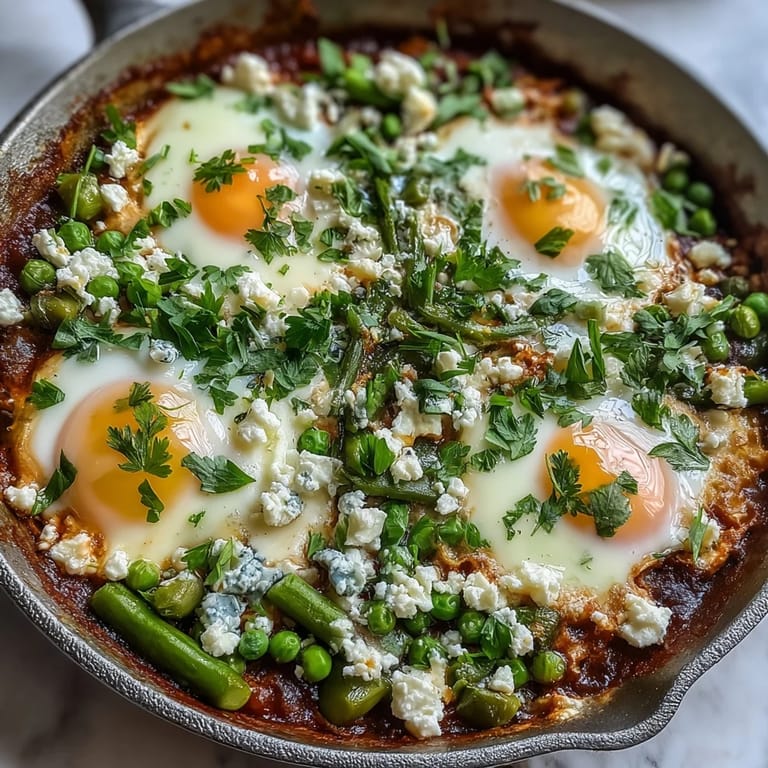
Save This shakshuka tastes like springtime in a pan, and once you make it once, you'll find yourself returning to it season after season. It's the kind of dish that feels both simple and special, which is perhaps the highest compliment a recipe can receive.
Recipe FAQs
- → Can I use frozen vegetables instead of fresh?
Yes, frozen peas and broad beans work perfectly. No need to thaw before blanching. Fresh asparagus is recommended for best texture, but frozen can be used in a pinch.
- → How do I know when the eggs are properly cooked?
Cook covered on low heat for 7-10 minutes. Whites should be set and opaque while yolks remain runny. For firmer yolks, cook an additional 2-3 minutes.
- → What can I substitute for feta cheese?
Goat cheese, ricotta salata, or crumbled halloumi work well. For dairy-free, use nutritional yeast or omit entirely and add extra herbs for flavor.
- → Can this be made ahead of time?
Prepare the tomato and vegetable base up to 2 days ahead and refrigerate. Reheat gently, then add eggs and cook fresh for best results.
- → What bread pairs best with shakshuka?
Crusty sourdough, pita, flatbreads, or challah are ideal for scooping. For gluten-free, try gluten-free sourdough or corn tortillas.
- → How can I adjust the spice level?
Increase chili flakes to ½ teaspoon for more heat, or add fresh jalapeños with the onions. Serve with harissa or hot sauce on the side for individual preference.