 Save
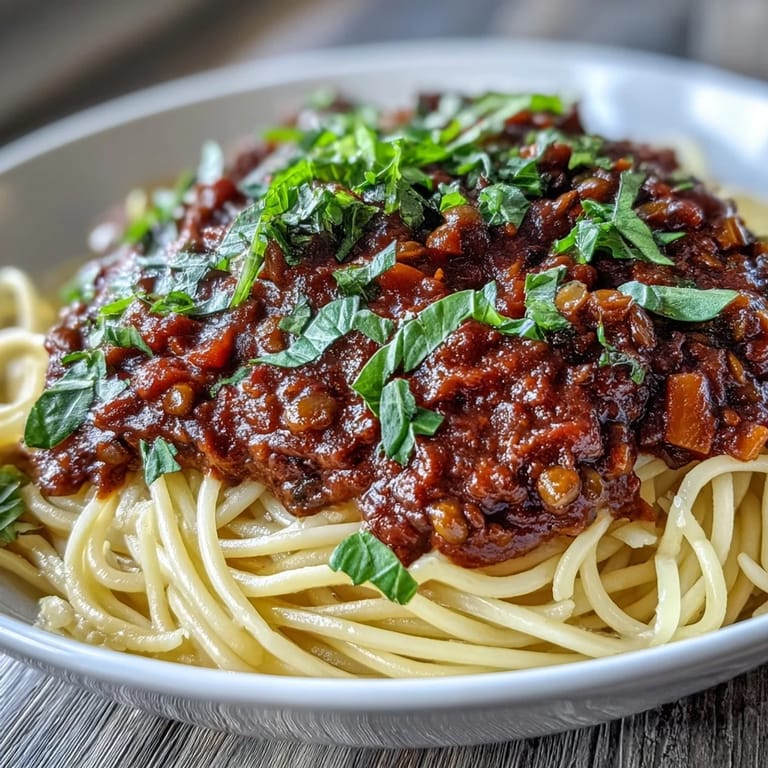
Save My kitchen smelled like a Italian grandmother's dream the first time I simmered lentils instead of ground meat for Bolognese. I'd been standing in the grocery store, paralyzed between the meat counter and the produce section, when a woman next to me mentioned she'd stopped buying meat but couldn't give up her pasta nights. That simple comment sent me home with dried lentils and a mission to prove that something without meat could still feel indulgent and deeply satisfying. What surprised me most wasn't that it tasted good—it was how the lentils broke down into the sauce, creating this velvety richness that made people forget they weren't eating the traditional version.
I made this for my sister's book club potluck, nervous she'd roll her eyes at a vegetarian pasta dish among the crowd. One of her friends came back to my kitchen asking for the recipe before dessert was even served, and I realized right then that people don't crave meat—they crave comfort and depth, and this sauce delivers both. Now it's the dish I'm known for bringing, which feels like a small victory in its own way.
Ingredients
- Olive oil: Start with good quality if you have it, because it's going into a raw base and will carry flavor throughout.
- Onion, carrots, and celery: This holy trinity is your foundation—dice them small and consistent so they soften evenly and meld into the sauce rather than staying chunky.
- Garlic: Mince it fine and don't skip that one minute of cooking it alone; it mellows the bite and becomes almost sweet.
- Dried brown or green lentils: They hold their shape beautifully and won't turn to mush, unlike red lentils which are tempting but create a different texture entirely.
- Crushed tomatoes: Use canned, not fresh—consistency matters here, and canned tomatoes are already broken down and ready to work.
- Tomato paste: This is your umami bomb; don't water it down or skip it thinking the crushed tomatoes are enough.
- Dried oregano and basil: These need time to bloom in the liquid, so layering them in early lets them infuse properly.
- Smoked paprika: Just half a teaspoon, but it adds a subtle depth that makes people ask what you're hiding in the sauce.
- Bay leaf: Non-negotiable and must be removed before serving (learned that lesson the hard way with my dentist).
- Vegetable broth: This keeps everything tasting clean and fresh rather than heavy.
Tired of Takeout? 🥡
Get 10 meals you can make faster than delivery arrives. Seriously.
One email. No spam. Unsubscribe anytime.
Instructions
- Build your base:
- Heat the olive oil in a large saucepan and add the diced onion, carrot, and celery all at once. Let them sizzle and soften for 7 to 8 minutes—you're looking for the edges to turn golden and the raw smell to fade into something sweet and caramelized.
- Wake up the garlic:
- Stir in the minced garlic and listen for that immediate fragrant sizzle; one minute is all it needs before the garlic becomes part of the base rather than a sharp note.
- Layer in the lentils and flavor:
- Add the rinsed lentils, crushed tomatoes, tomato paste, oregano, basil, paprika, and bay leaf, stirring everything together until the paste is fully incorporated and no white streaks remain. The mixture will look thick and concentrated at this moment.
- Simmer low and slow:
- Pour in the vegetable broth, bring everything to a boil for just a moment to see the bubbles break the surface, then reduce the heat to low, cover the pan, and let it simmer gently for 30 to 35 minutes. Stir occasionally and listen for the quiet bubbling—that's the lentils softening and the flavors melding into something greater than their parts.
- Finish and season:
- Fish out that bay leaf and taste the sauce; it should taste rich and full but not one-dimensional. Add salt and pepper until it sings, and if it feels too acidic, a tiny splash of balsamic vinegar or just a pinch of sugar can balance it beautifully.
- Bring the pasta into the mix:
- While the sauce simmers, get your pasta water boiling and cook the pasta according to its package—you want it tender but with just a whisper of resistance so it doesn't absorb the sauce and become mushy.
- Marry them together:
- Drain the pasta and serve it into bowls with the warm sauce spooned generously over top, finishing with fresh basil or parsley and cheese if that's your style.
 Save
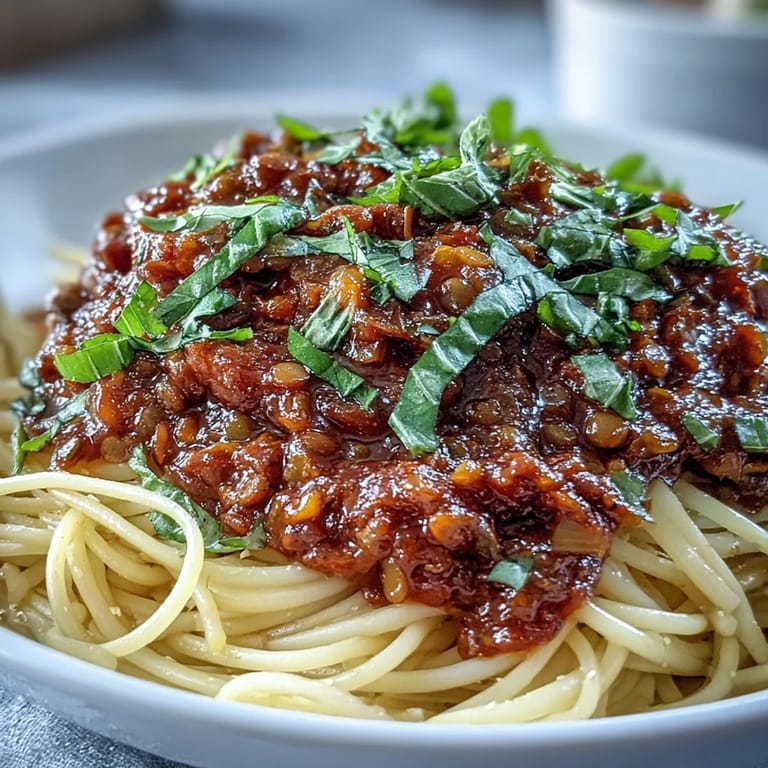
Save There's a moment about halfway through cooking this sauce when the whole kitchen transforms—the smell becomes so inviting that people start drifting in asking what's for dinner, drawn by something they can't quite name. That's when I know it's working, when the dish stops being an ingredient list and becomes an experience.
Why Lentils Are the Secret Weapon
Lentils are the great unsung hero of the vegetarian kitchen because they do something meat does—they create texture, substance, and a feeling of fullness. They absorb and carry flavors around them while bringing their own earthy sweetness, and unlike some plant-based proteins that feel like they're trying too hard to be meat, lentils just exist confidently in a sauce and let you decide what they are. I've had people tell me this tastes better than the beef version they grew up with, and I think it's because the lentils contribute a subtle, complex flavor that ground meat can sometimes overpower.
The Case for Doubling the Recipe
Make extra, or actually just double everything from the start because this sauce is one of those dishes that tastes sharper and more integrated after a night in the refrigerator. It freezes beautifully for up to three months, and there's something wonderful about opening your freezer on a tired evening and finding comfort already made and waiting.
Variations and Pairing Ideas
This sauce adapts easily to whatever you have on hand or wherever your mood takes you. Layer it with ricotta and pasta sheets for a vegetarian lasagna, spoon it over creamy polenta for something entirely different, or even use it as a hearty filling for stuffed peppers. A light Italian red like Chianti cuts through the richness beautifully, or if wine isn't your thing, just pour yourself a glass of whatever makes you happy and sit down to eat.
- Try stirring in a handful of fresh spinach at the very end for a hidden green vegetable boost.
- If you prefer a creamier sauce, swap half the lentils for red lentils which break down faster and create that texture naturally.
- For a deeper, almost meaty flavor, add a tablespoon of balsamic vinegar or a splash of red wine if you have it open.
 Save
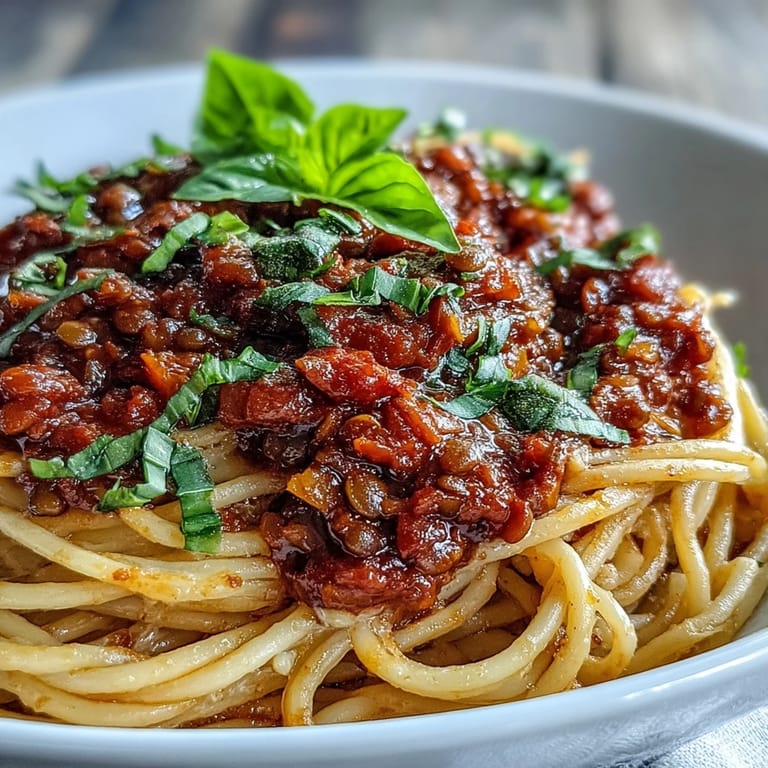
Save This recipe taught me that the best dishes aren't about following rules perfectly—they're about understanding the why behind each step so you can adapt with confidence. Make this tonight, and I bet it becomes one of those meals you return to again and again, finding something new to appreciate about it each time.
Recipe FAQs
- → What type of lentils work best?
Brown or green lentils hold their shape beautifully during simmering, creating the perfect texture. Red lentils cook faster but result in a creamier consistency. Rinse thoroughly before adding to the sauce.
- → Can I make this ahead?
Absolutely. The sauce actually improves after sitting overnight as flavors meld together. Store in an airtight container in the refrigerator for up to 4 days or freeze for up to 3 months. Reheat gently with a splash of water or broth.
- → What pasta pairs well?
Spaghetti is traditional, but penne, rigatoni, or fusilli catch the sauce beautifully. For gluten-free needs, choose brown rice pasta or chickpea pasta. Whole wheat varieties add extra fiber and nutrients.
- → How do I adjust the consistency?
For a thicker sauce, simmer uncovered the last 10 minutes. If too thick, add warm vegetable broth a quarter cup at a time. A splash of balsamic vinegar balances acidity while adding depth.
- → What vegetables can I add?
Finely diced mushrooms boost umami flavor. Bell peppers, zucchini, or spinach work well too. Sauté hearty vegetables with the base aromatics, adding delicate greens like spinach in the last few minutes.