 Save
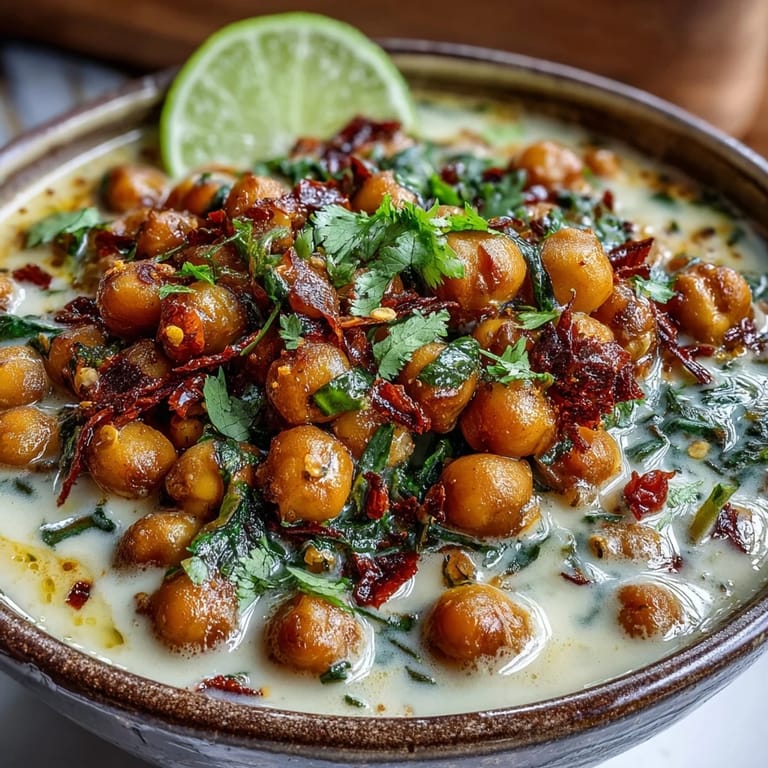
Save There's something about the way cumin and coriander hit the hot oil that tells you everything's going to be good. I discovered this chickpea curry on a Tuesday night when I had nothing in the pantry except cans and a stubborn craving for something warm. What started as making do with basics turned into the kind of meal that lingers in your kitchen for hours, filling every corner with that golden, spiced comfort that makes you want to cook it again immediately.
I made this for my neighbor after her surgery, and watching her face when she tasted it was the whole point of cooking. She told me later it was the first meal since the procedure that didn't taste like recovery, it tasted like living again. That's when I realized this curry wasn't just easy or delicious, it had this quiet power to make people feel cared for.
Ingredients
- Vegetable oil: Use something neutral that won't overpower the spices—I've learned the hard way that fancy oils sometimes steal the show.
- Onion and garlic: The foundation of everything good happening in your pan, so take the time to mince them well rather than rush through.
- Fresh ginger: Grating it fresh makes all the difference; the bottled stuff feels flat by comparison and I'm never going back.
- Ground cumin and coriander: These two are the heart of the flavor, so use spices you actually smell when you open the container.
- Turmeric, garam masala, chili powder, and paprika: The spice blend is flexible—adjust these to your mood and heat tolerance without guilt.
- Chickpeas: Rinsing them removes that tinny taste that ruins curry, so don't skip that step even when you're in a hurry.
- Coconut milk: Full-fat is worth it because the richness makes the whole curry taste more intentional and less like health food.
- Diced tomatoes: Canned tomatoes are better here than fresh because they've had time to develop flavor and they won't water down your sauce.
- Vegetable broth or water: This controls the thickness, so add less if you want a thicker curry or more if you're feeling soupy.
- Baby spinach: Optional but adds color and nutrition without changing the flavor in a way that feels intrusive.
- Lime juice: The final squeeze brightens everything and is the secret finishing touch that makes people ask what you did differently.
Tired of Takeout? 🥡
Get 10 meals you can make faster than delivery arrives. Seriously.
One email. No spam. Unsubscribe anytime.
Instructions
- Warm your oil and start the base:
- Heat oil over medium heat, then add your diced onion. Listen for that gentle sizzle and let it cook for 4 to 5 minutes until the edges turn translucent and it softens—you'll know it's ready when the kitchen smells like caramelizing sweetness.
- Build the aromatics:
- Add garlic and ginger, stir constantly for about a minute. You're not trying to cook them completely, just wake them up so they release their fragrance into the oil.
- Toast your spices:
- This is the moment that changes everything. Add all your ground spices at once and stir for exactly one minute—you want them fragrant and slightly darkened but not burned, which happens faster than you'd think.
- Combine everything:
- Add chickpeas, tomatoes with their juice, coconut milk, and broth. Stir until it all comes together, making sure nothing sticks to the bottom of the pan.
- Simmer gently:
- Bring to a gentle simmer, cover partially, and let it bubble quietly for about 15 minutes. This is when you can step back, breathe in the aroma, and know the hardest part is done.
- Add spinach if using:
- Uncover, add spinach if you're using it, and let it wilt for another 2 to 3 minutes. The curry will look prettier and taste fresher.
- Finish with brightness:
- Squeeze in the lime juice and taste, adjusting salt or heat as you go. This final step feels simple but it's what turns a good curry into one people remember.
- Serve with intention:
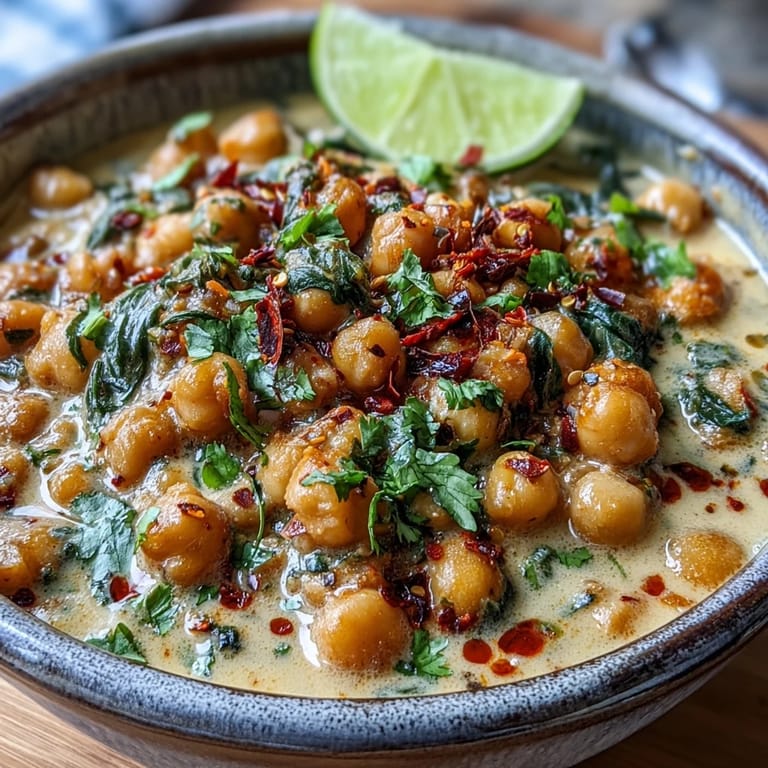
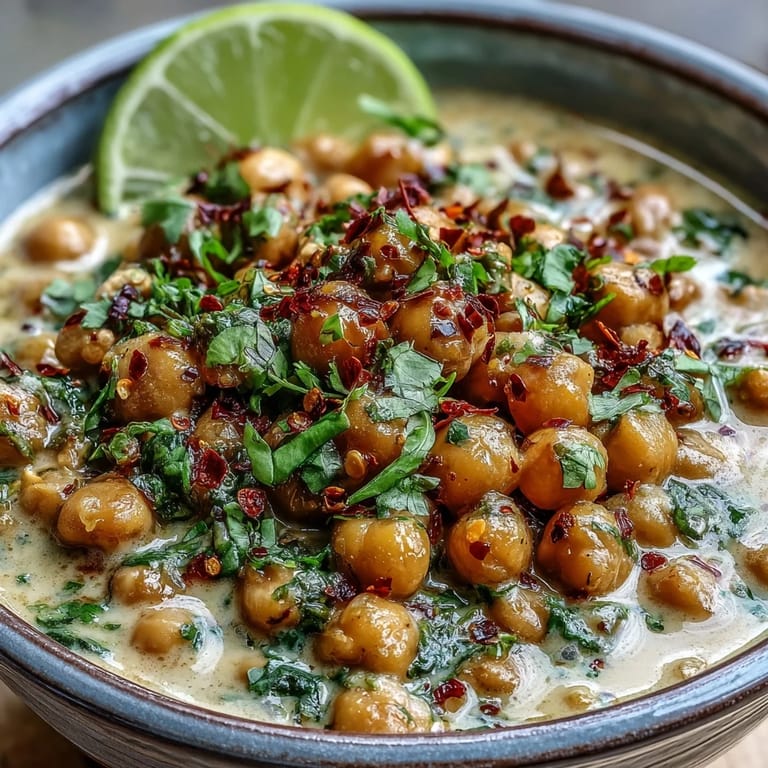
- Ladle into bowls, top with cilantro and a lime wedge. Serve alongside rice or naan so people can create their own perfect bite.
 Save
Save  Save
Save My partner came home during the simmering stage and just stood in the kitchen doorway for a moment, not saying anything, just breathing in. That's when I understood why comfort food matters—it's not just about filling your stomach, it's about someone else knowing you took the time. This curry does that without needing to be complicated.
Customizing Your Curry
The beauty of this recipe is that it bends to what you have and what you're craving. I've added roasted sweet potato chunks when I had them on hand, stirred in diced bell peppers for brightness, and even used black chickpeas when I wanted something more substantial. The spice ratio is forgiving too—if you're cooking for someone who gets nervous around heat, dial back the chili powder and paprika without apology. The coconut milk will still carry everything beautifully.
What to Serve It With
This curry is honest enough to stand on its own but generous enough to welcome a side. Basmati rice is traditional and perfect, but brown rice feels nourishing in a different way, and if you have naan or flatbread the curry will make you look like you've done something impressive. I've also served it over cauliflower rice for lighter eating and nobody complained, which told me the flavor is strong enough to stand alone.
Storage and Reheating
This curry tastes even better the next day once everything has had time to get to know each other. Store it in an airtight container in the fridge for up to four days, and when you're ready to eat it again just reheat gently on the stovetop over medium heat, stirring occasionally. You can also freeze it for up to three months, which means you can have a good meal waiting for those nights when cooking feels impossible.
- Let it cool completely before freezing so condensation doesn't dilute the flavor.
- Add fresh cilantro and lime juice after reheating rather than before storing, so the brightness stays bright.
- If it thickens too much after sitting, just add a splash of water or broth and it'll come back to life.
 Save
Save 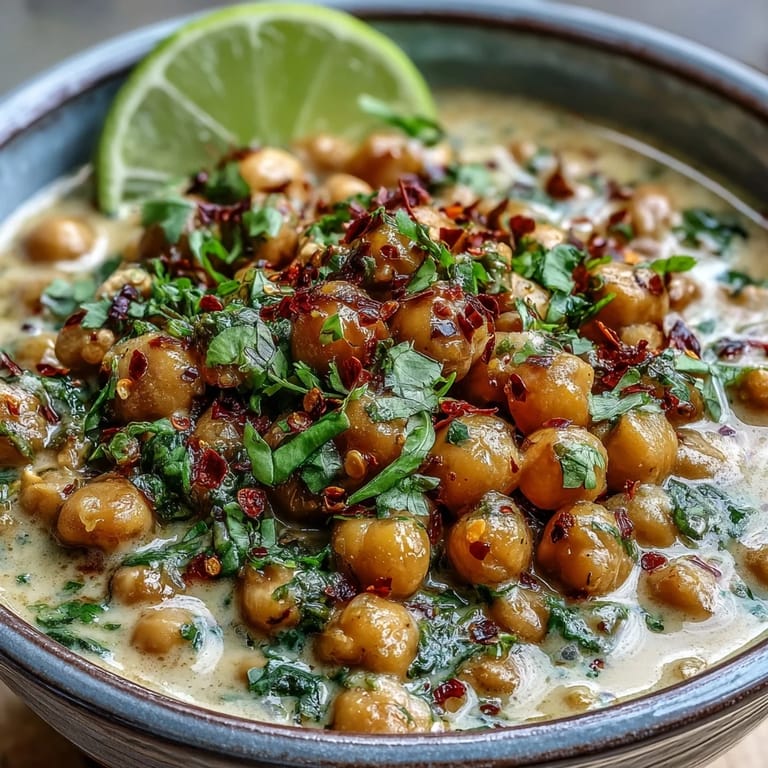 Save
Save This is the kind of recipe that whispers rather than shouts, letting the spices talk and the coconut milk smooth everything into comfort. Make it once and it becomes the thing you turn to when you need to prove to yourself or someone else that good food doesn't require hours or complicated skills.
Recipe FAQs
- → How spicy is this curry?
The spice level is medium and customizable. The combination of chili powder and paprika provides gentle warmth, while the aromatic spices like cumin and coriander add flavor without heat. Adjust the chili amount to suit your preference.
- → Can I make it ahead of time?
Absolutely. This actually tastes better the next day as flavors meld together. Store in an airtight container in the refrigerator for up to 4 days. Reheat gently on the stovetop, adding a splash of water if needed.
- → What can I serve with it?
Steamed basmati rice is classic, but brown rice, quinoa, or cauliflower rice work well too. Warm naan, roti, or gluten-free flatbread are perfect for soaking up the sauce. A simple cucumber raita balances the richness.
- → Can I freeze this curry?
Yes, it freezes beautifully. Cool completely, then transfer to freezer-safe containers for up to 3 months. Thaw overnight in the refrigerator and reheat on the stovetop. The texture remains excellent after freezing.
- → How do I make it thicker?
Simmer uncovered for the last 5-10 minutes to reduce the liquid. You can also mash some chickpeas against the side of the pan to naturally thicken the sauce. Adding vegetables like sweet potato also creates a heartier consistency.
- → Is this suitable for meal prep?
Perfect for meal prep. The flavors deepen over time, and it reheats beautifully. Portion into containers with your chosen grain for ready-to-go lunches throughout the week.