 Save
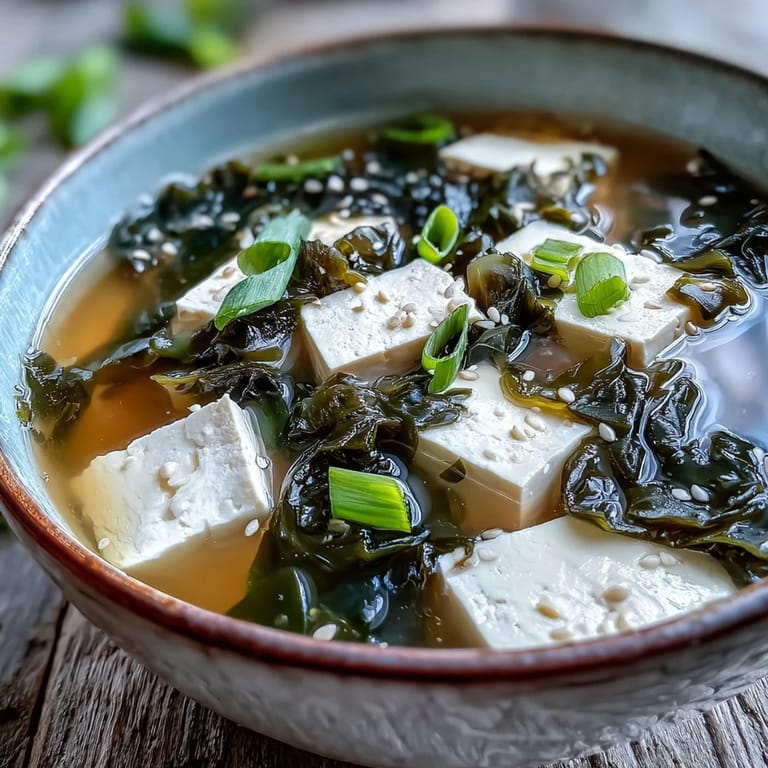
Save My first bowl of proper miso soup arrived on a gray Tokyo morning when I was completely lost, both literally and in my head. A tiny restaurant owner saw me standing confused outside her shop and wordlessly guided me to a stool at the counter. She ladled this golden, steaming soup into a ceramic bowl and I understood something essential about hospitality in that first sip—how something so simple could feel like a warm conversation. Now whenever I make it at home, I'm chasing that exact feeling of being cared for.
I made this for my roommate during her first rough week at a new job, and she cried a little over the bowl—not from sadness, but from relief. She said it tasted like the opposite of stress. That's when I realized this soup has this strange power to ground you when everything feels uncertain.
Ingredients
- Dashi stock (4 cups): This is the soul of the soup; vegetarian dashi made from kombu and shiitake gives you all the umami depth without any fish, and you can make it ahead or buy it premade.
- White or yellow miso paste (3 tablespoons): Choose a milder miso if this is your first time—it's creamy and forgiving, and the probiotics only survive if you don't boil it after adding.
- Silken tofu (200g), cut into 1/2-inch cubes: Silken tofu is delicate and trembling; handle it like you're moving eggs and it will reward you with that cloud-like texture.
- Dried wakame seaweed (2 tablespoons): It expands when soaked, so don't be stingy; it adds mineral depth and a gentle briny flavor.
- Scallions (2), finely sliced: The fresh bite at the end brings everything alive and gives you a little textural contrast to the soft soup.
Tired of Takeout? 🥡
Get 10 meals you can make faster than delivery arrives. Seriously.
One email. No spam. Unsubscribe anytime.
Instructions
- Start the broth gently:
- Bring your dashi to a medium simmer—you want little bubbles rising lazily, not an aggressive boil that will shatter your delicate tofu later. This takes about five minutes and the whole kitchen will start smelling like home.
- Wake up the seaweed:
- While the broth is warming, soak your dried wakame in cold water for five minutes and it'll unfurl into tender ribbons. This step keeps it from toughening up in the hot soup.
- Dissolve the miso smoothly:
- Scoop some of the hot dashi into a small bowl with your miso paste and whisk it until it's completely smooth and there are no little lumps hiding. This is the trick—dissolving it separately prevents those grainy pockets that some people find surprising.
- Add tofu and seaweed carefully:
- Gently stir the tofu cubes and drained wakame into the simmering dashi and let it warm for two to three minutes, moving slowly so the tofu stays whole. You're basically cradling it through these last few minutes.
- Finish without boiling:
- Remove the pot from heat and stir in your miso mixture slowly—the moment it hits the hot broth, you're done cooking. Boiling after this point kills the probiotics and flattens the flavor that makes miso soup taste alive.
- Serve right away:
- Ladle into bowls immediately while everything is still steaming, scatter your fresh scallions across the top, and bring it to the table before it cools. The presentation matters as much as the taste.
 Save
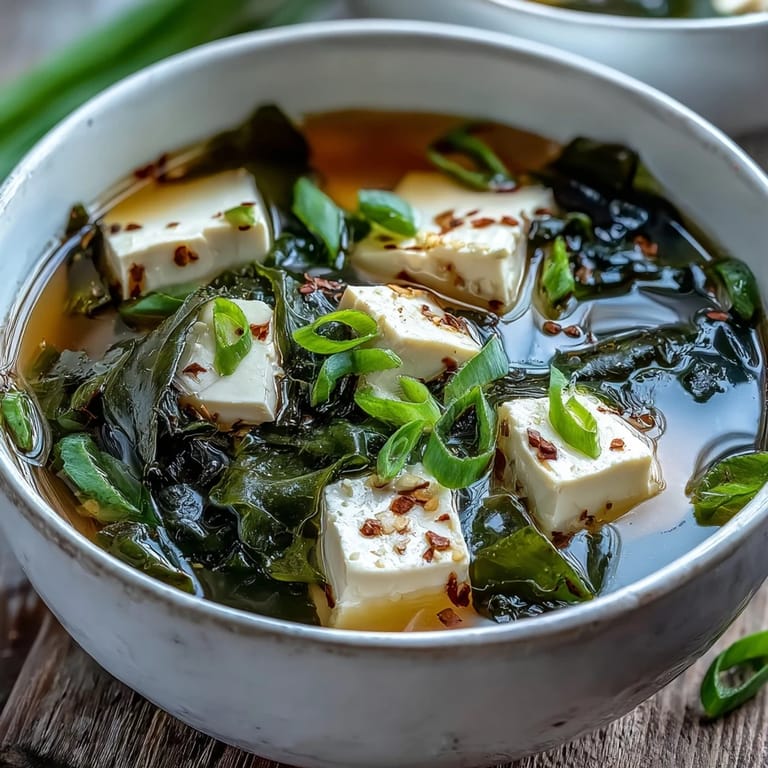
Save There's something about handing someone a bowl of miso soup that feels like an act of small magic. You're giving them warmth, probiotics, comfort, and this understated elegance all at once—and they get it immediately without you having to explain anything.
The Soul of Umami
Dashi is where the entire soup lives or dies, and I spent months thinking I needed to make it from scratch before realizing that quality premade dashi is absolutely worth buying. The kombu and shiitake versions taste deeper than anything a rushed morning can produce, and nobody needs to know you didn't spend an hour simmering it yourself. What matters is that your broth tastes like it's been loved.
Playing With Flavor
Once you make this soup a few times, you'll start hearing the recipe like a familiar song and wanting to improvise. Some mornings I add a slice of fresh mushroom, other times a handful of spinach that wilts into the broth in seconds, and occasionally I'll mix red and white miso together for something with more complexity and a hint of earthiness. The base is strong enough to hold your variations without falling apart, which is the mark of a recipe worth keeping.
What Happens Next
This soup drinks well with steamed rice on the side, or you can serve it before a larger meal as the quiet opener that says you care about how the evening unfolds. I've also discovered that making a larger batch and drinking it throughout the day feels like self-care wrapped in a kitchen moment, and that simple act can shift how you move through everything else.
- Keep extra dashi in the fridge so you can make this soup in under fifteen minutes any day you need comfort.
- Toast the scallions for thirty seconds in a dry pan before slicing if you want them to taste even brighter and more alive.
- If your miso has lumps, strain it through a fine sieve before adding it to the pot and you'll have silky perfection every time.
 Save
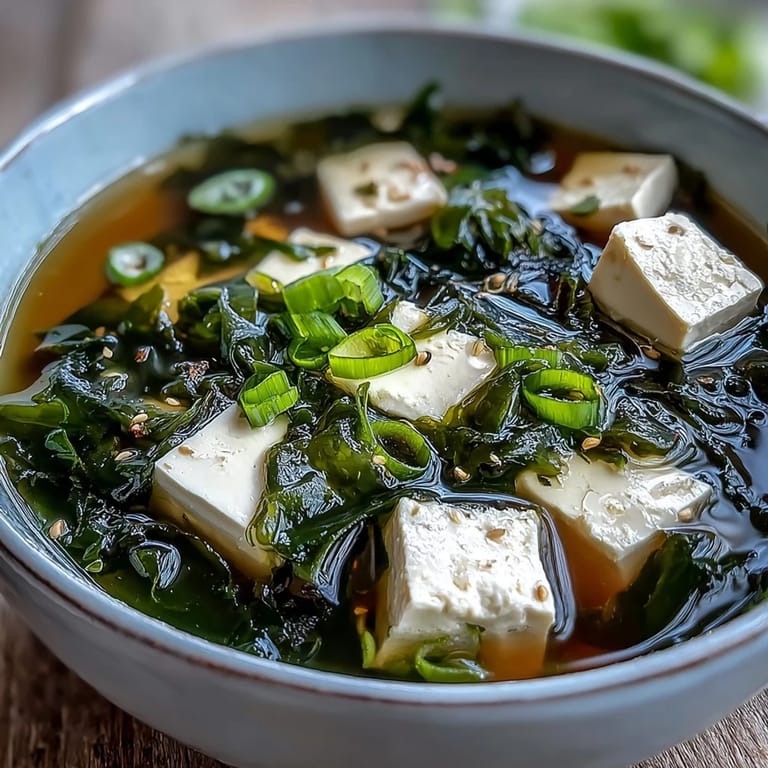
Save This soup taught me that sometimes the most nourishing meals are the ones that ask the least of you. Make it when you need to feel held.
Recipe FAQs
- → What type of miso works best?
White miso (shiro) offers a milder, sweeter flavor perfect for beginners. Yellow miso provides a balanced earthiness. Red miso delivers a stronger, more intense taste. You can blend different varieties for complex depth.
- → Can I use different seaweed varieties?
Wakame is traditional and readily available. Nori strips work as a garnish but don't rehydrate the same way. Kombu can flavor the broth but should be removed before serving. Stick with wakame for authentic texture and taste.
- → Why not boil the miso?
Boiling miso paste kills its beneficial probiotics and enzymes. It can also cause the miso to separate and become grainy. Always dissolve it in warm liquid first, then stir into the soup after removing from heat for optimal flavor and nutrition.
- → Is this suitable for meal prep?
The soup keeps well for 2-3 days refrigerated, though the tofu may soften further. Store without the scallion garnish and reheat gently—never bring to a boil after adding miso. Add fresh scallions just before serving.
- → What can I serve with miso soup?
Enjoy as a starter before teriyaki, tempura, or sushi. For a complete meal, pair with steamed rice, pickled vegetables, and a protein like grilled fish or tofu. It also complements a simple green salad with sesame dressing.
- → How do I make this vegan?
Use kombu and shiitake-based dashi instead of traditional bonito fish stock. Many miso pastes are naturally vegan, but always check labels for fish-derived ingredients like bonito or dashi powder.