 Save
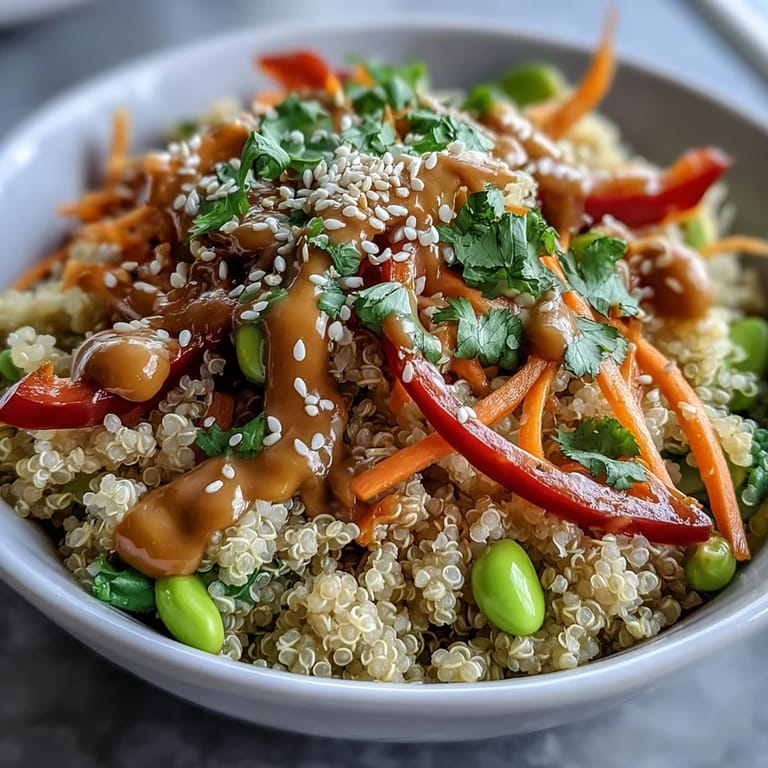
Save My colleague Sarah brought this bowl to a potluck on a sweltering August afternoon, and I watched it disappear faster than the ice in our water glasses. The creamy coconut quinoa caught me off guard—I'd never thought to cook grains that way—and that peanut dressing had everyone hovering over the serving dish with a kind of quiet intensity. She laughed when I asked for the recipe, saying she'd assembled it one evening after a farmers market run, with no real plan except to use what she'd bought. That bowl somehow felt both deeply comforting and bright with possibility.
I made this for my partner on a Tuesday when we'd both had the kind of day where takeout felt inevitable, but I wanted something that felt intentional. The kitchen smelled amazing—toasted sesame oil mingling with lime—and by the time I finished arranging the vegetables in neat little piles across those bowls, we'd already decided this was happening weekly. He drizzled extra dressing and ate it straight from the counter, which tells you everything about how good it is.
Ingredients
- Quinoa, rinsed: Use a fine-mesh strainer here; rinsing removes the bitter coating and makes the texture genuinely fluffy rather than grainy.
- Coconut milk, full-fat or light: Full-fat gives you richness and silkiness; light keeps it bright if you prefer—both work beautifully.
- Water: This ratio (one-to-one with liquid) is your formula for perfectly cooked quinoa every time.
- Salt: Season the cooking liquid itself so the grain absorbs flavor from the start.
- Red bell pepper, thinly sliced: The sweetness plays against the dressing's savory-nutty depth.
- Carrot, julienned or shredded: Julienne gives you delicate strands; shredding is faster if you have a box grater.
- Cucumber, thinly sliced: Add this right before eating if prepping ahead, otherwise it'll weep and water down your bowl.
- Purple cabbage, shredded: This holds its crunch beautifully and won't wilt, even if you make this the night before.
- Edamame, cooked and shelled: These little pops of protein make the bowl feel substantial without heavy.
- Fresh cilantro, chopped: Don't skip it; the brightness it brings is non-negotiable.
- Sesame seeds: Toast them lightly in a dry pan first for deeper flavor and better crunch.
- Creamy peanut butter: Natural or conventional both work, but taste it first—some brands are saltier than others.
- Soy sauce: Use tamari or coconut aminos if you're going gluten-free; the flavor shifts slightly but stays delicious.
- Rice vinegar: The gentle acidity is key; it won't overpower like distilled vinegar would.
- Lime juice, fresh: Bottled works in a pinch, but fresh is noticeably brighter and makes the whole dressing sing.
- Maple syrup or honey: This balances the salty-sour elements and keeps the dressing smooth rather than harsh.
- Toasted sesame oil: A little goes a long way; it's concentrated flavor, so use the amount called for and taste before adding more.
- Warm water: Add this gradually to get the dressing to the consistency you want—pourable but still clinging to the vegetables.
Tired of Takeout? 🥡
Get 10 meals you can make faster than delivery arrives. Seriously.
One email. No spam. Unsubscribe anytime.
Instructions
- Rinse and combine the quinoa:
- Put your quinoa in a fine-mesh strainer and run cool water over it, stirring gently with your fingers, until the water runs clear. This matters more than you'd think—it's the difference between fluffy and gritty. Combine it in a saucepan with the coconut milk, water, and salt.
- Bring to a boil, then simmer gently:
- You'll hear it bubbling within a few minutes; that's when you reduce the heat to low, cover tightly, and let it sit quietly for 15 minutes. You're not looking for a rolling boil here—just gentle heat that coaxes the liquid into the grain.
- Rest and fluff:
- Remove the pan from heat and keep the lid on for 5 minutes; this allows the residual steam to finish cooking and helps the quinoa separate into individual grains. When you fluff it with a fork, it should feel light and have visible little spirals.
- Prep your vegetables while the grain cooks:
- This is where you save time—slice the bell pepper into thin strips, julienne or shred the carrot, slice the cucumber and cabbage into slivers. If your edamame aren't already cooked, this is when you'd add them to boiling water for a quick 5-minute bath.
- Whisk the dressing into existence:
- In a small bowl, add the peanut butter, soy sauce, rice vinegar, lime juice, maple syrup, and sesame oil. Whisk steadily until everything is incorporated and you don't see streaks of peanut butter anymore. Then add warm water one tablespoon at a time, whisking between each addition, until it's the consistency of cream—pourable but still coating a spoon.
- Build your bowls:
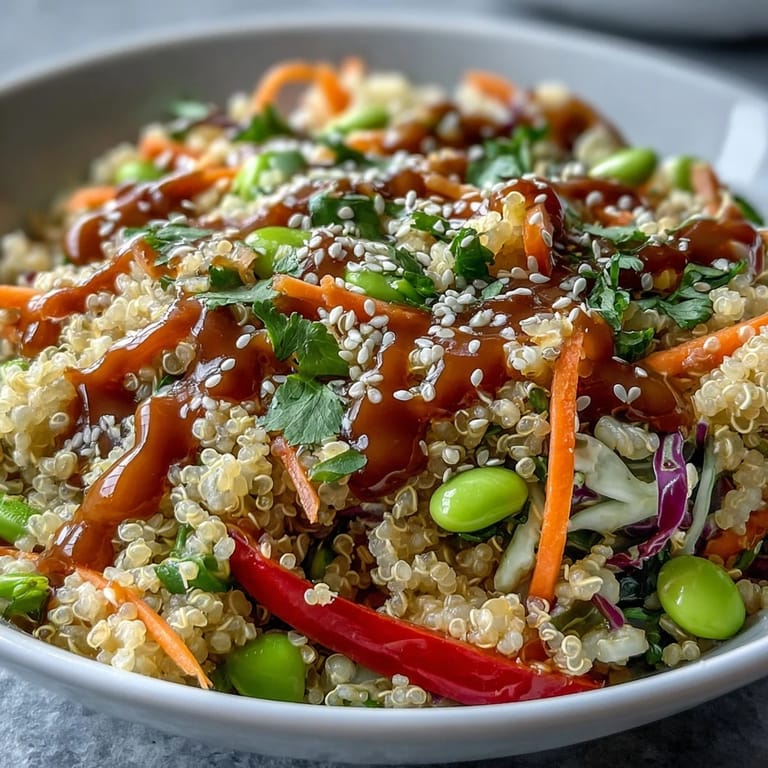
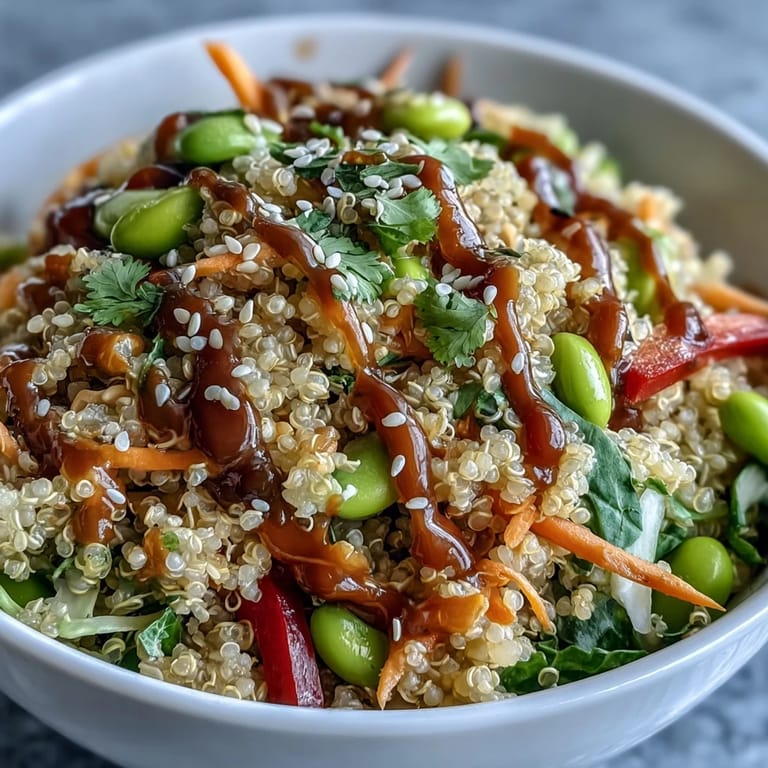
- Divide the warm (or cooled) quinoa among four bowls, creating a gentle bed. Arrange your vegetables and edamame on top in whatever way makes you happy—neat rows, casual piles, whatever. Drizzle the dressing generously over everything, then scatter cilantro and sesame seeds on top like you're finishing a work of art.
- Serve immediately or chill:
- Eat it warm if you've just made it, or let it sit in the refrigerator for an hour or two for a completely different, refreshing experience. Both versions are revelations.
 Save
Save There was this moment when I served this to my mother-in-law, who'd been skeptical about anything with coconut in a savory dish, and she went quiet for a few bites before asking for seconds. Later she admitted she'd been bracing herself and was completely surprised by how natural it all tasted together—how the creaminess didn't feel heavy or weird, just right. That bowl became something we make together now when she visits, which feels like more than just a recipe.
The Magic of Coconut in Savory Cooking
Coconut milk is one of those ingredients that sounds exotic until you actually cook with it regularly, and then it becomes your secret weapon. The fat content makes grains silky without any dairy, and it plays beautifully with lime and peanut flavors—there's a reason these combinations show up across Southeast Asian cooking. I used to think you had to choose between rich and light, but coconut taught me you can have both.
Why Raw Vegetables Matter Here
The entire appeal of this bowl hinges on the contrast between the soft, warm quinoa and the snap of fresh vegetables. That crispness is what keeps you coming back for another bite instead of feeling like you've eaten something heavy. Even in winter, when fresh vegetables feel scarce, a thinly sliced apple or some roasted radishes give you that same textural interest.
Building Flavor Layers That Actually Work
This bowl teaches you something important: good food rarely comes from a single ingredient doing all the work. The peanut dressing is savory, salty, tangy, and sweet all at once, and that complexity is what makes you want the dressing on every single bite. When each element is balanced, nothing drowns out anything else, and eating becomes an actual experience instead of just refueling.
- Taste your dressing before you pour it; you might prefer it thinner or thicker, tangier or sweeter, and small adjustments make it yours.
- Don't be shy with the garnishes—cilantro and sesame seeds aren't decoration, they're flavor boosters that finish the dish.
- Warm quinoa and cold vegetables create a temperature contrast that keeps eating this interesting from first bite to last.
 Save
Save This bowl has become my answer to the question of what to eat when you want something nourishing that doesn't feel like a chore to make. It's one of those rare recipes that lives up to the hype once you actually cook it.
Recipe FAQs
- → Can I make this bowl ahead of time?
Yes, this bowl meal preps beautifully. Store the coconut quinoa, vegetables, and peanut dressing in separate airtight containers in the refrigerator for up to 4 days. Assemble just before serving to maintain optimal texture.
- → What vegetables work best in this bowl?
The combination of red bell pepper, carrot, cucumber, and purple cabbage provides excellent crunch and color. Feel free to substitute with seasonal favorites like snap peas, shredded radish, or thinly sliced kale for variety.
- → How can I add more protein?
Grilled tofu, tempeh, or baked chicken breast make excellent protein additions. You can also increase the edamame to 1 cup or add roasted chickpeas for a plant-based protein boost.
- → Is the peanut dressing adjustable?
Absolutely. Thin the dressing with additional warm water for a lighter consistency. For more sweetness, add another teaspoon of maple syrup. Increase lime juice for extra tang or add sriracha for heat.
- → Can I use a different grain?
Brown rice, farro, or bulgur work well as substitutes. Adjust cooking liquid and time according to package instructions. The coconut milk cooking method creates delicious results with most whole grains.
- → How do I store leftovers?
Keep components separated in the refrigerator. The quinoa stays fresh for 4-5 days, while cut vegetables remain crisp for 3-4 days. The peanut dressing keeps for up to 2 weeks when refrigerated.