 Save
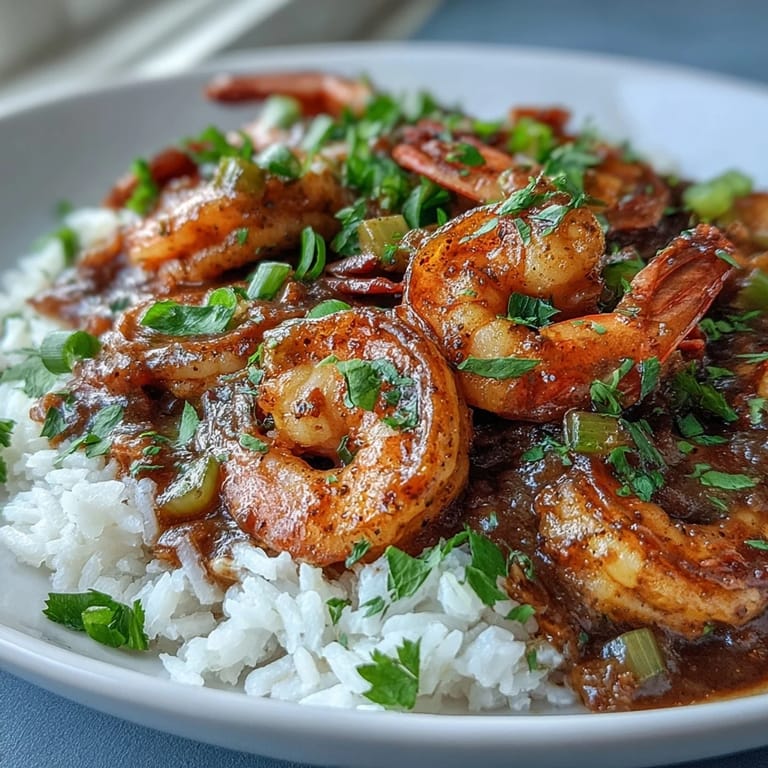
Save The smell of toasted flour has this way of pulling me right back to a tiny kitchen in the French Quarter, watching steam fog up the windows while a pot bubbled on the stove. I was visiting a friend who swore I had to learn étouffée the right way, which meant standing over that roux for what felt like forever, stirring until my arm ached. She kept saying the color had to be just right, like melted chocolate, or the whole thing would taste flat. When we finally sat down with bowls piled high over rice, I understood why people guard their roux like a family secret. That first bite was smoky, rich, and just spicy enough to make me reach for another forkful before I even swallowed.
I made this for a small dinner party once, and the whole apartment smelled like a Bourbon Street restaurant by the time guests arrived. One friend who grew up in Baton Rouge took a bite and got quiet for a second, then told me it reminded her of her grandmother's kitchen. That is the moment I realized étouffée is not just about feeding people, it is about giving them a little piece of home, even if they have never been to New Orleans. The conversation that night turned into stories about family recipes and the dishes we all crave when we are far from where we grew up.
Ingredients
- Vegetable oil and all purpose flour: These two create the roux, the soul of the dish, and you need equal parts of each to get that silky, nutty base that holds everything together without breaking.
- Onion, green bell pepper, and celery: The holy trinity of Cajun cooking, this trio adds sweetness, structure, and a subtle vegetal note that balances the richness of the roux.
- Garlic: Fresh minced garlic blooms in the hot pot and adds a sharp, aromatic punch that cuts through the heaviness and wakes up every other flavor.
- Shrimp or crawfish: Tender, sweet shellfish are traditional here, and they cook quickly in the simmering sauce, soaking up all that spice and turning melt in your mouth tender.
- Seafood stock: This brings a briny, oceanic backbone to the dish, though chicken stock works in a pinch if that is what you have on hand.
- Worcestershire sauce: A splash adds umami and a hint of tang that deepens the overall complexity without shouting for attention.
- Cajun seasoning and cayenne pepper: These bring the heat and the signature spice blend that makes étouffée taste like the Crescent City, and you can dial them up or down depending on your tolerance.
- Bay leaf: One leaf simmers in the pot and lends a subtle earthiness that ties all the flavors together, just remember to fish it out before serving.
- Cooked white rice: Fluffy, neutral rice is the perfect vehicle for soaking up every drop of that thick, flavorful sauce.
- Green onions and fresh parsley: A bright, fresh garnish that adds color and a little herbaceous lift right before the bowl hits the table.
Tired of Takeout? 🥡
Get 10 meals you can make faster than delivery arrives. Seriously.
One email. No spam. Unsubscribe anytime.
Instructions
- Make the roux:
- Heat the oil in a heavy pot over medium heat and whisk in the flour, stirring constantly as it darkens slowly from blonde to the color of milk chocolate. This takes patience, usually 15 to 20 minutes, and you cannot walk away or it will burn and turn bitter.
- Cook the vegetables:
- Add the onion, bell pepper, and celery to the roux and let them soften and sweeten for 5 to 7 minutes, scraping up any stuck bits from the bottom of the pot. Toss in the garlic and cook just until it smells fragrant, about a minute.
- Build the sauce:
- Pour in the seafood stock gradually, whisking to blend it smoothly with the roux so no lumps form. The mixture will loosen and start to look glossy as it comes together.
- Add the shrimp and seasonings:
- Stir in the shrimp, Worcestershire, Cajun seasoning, cayenne, bay leaf, salt, and pepper, making sure everything is well coated. Bring it to a gentle simmer, then lower the heat and let it cook uncovered for 20 to 30 minutes, stirring now and then, until the sauce thickens and clings to the back of a spoon.
- Finish and serve:
- Taste and adjust the salt and spice if needed, pull out the bay leaf, and spoon the étouffée over mounds of hot rice. Scatter green onions and parsley on top and serve while it is still steaming.
 Save
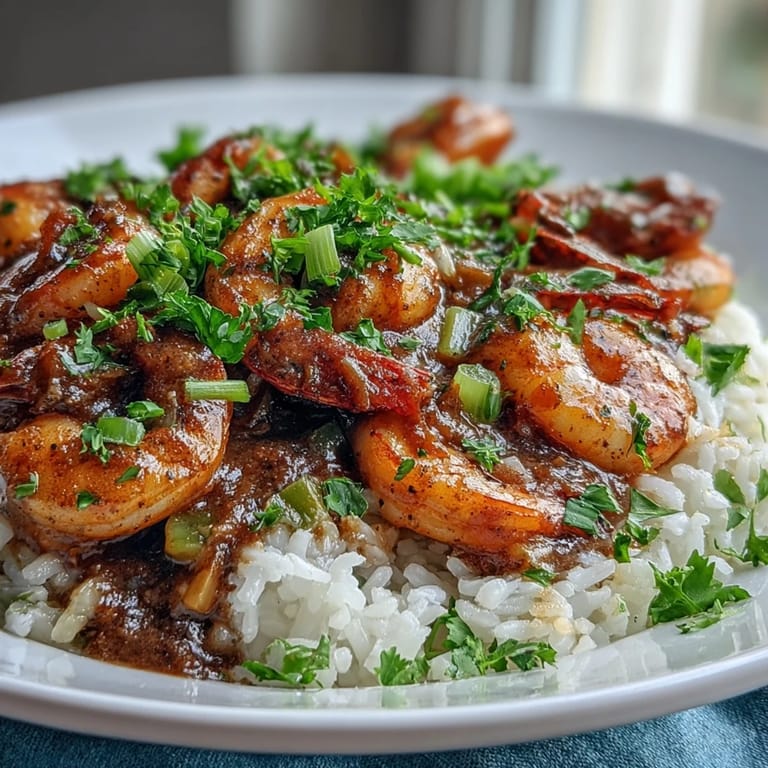
Save There was an evening I made this on a whim after a long week, just because I needed something warm and comforting that felt like a hug in a bowl. I did not have anyone coming over, just me and a glass of wine, and I remember sitting at the kitchen table with the radio on, scraping my bowl clean and feeling like I had traveled somewhere without leaving my apartment. That is when I realized cooking something this flavorful is not just about impressing others, sometimes it is about treating yourself to a little magic on an ordinary Tuesday night.
Choosing Your Protein
Shrimp is classic and cooks fast, but crawfish is what you will find in a lot of old school Louisiana kitchens, especially during crawfish season when they are plump and sweet. If shellfish is not your thing or you are cooking for someone with allergies, diced chicken thighs or smoky andouille sausage work beautifully and soak up the sauce just as well. I have even made a vegetarian version with thick sliced mushrooms and chunks of firm tofu, and it was surprisingly satisfying, though it is a different dish entirely.
Storing and Reheating
Étouffée keeps in the fridge for up to three days in an airtight container, and honestly, the flavors marry and mellow overnight, making leftovers even better than the first serving. When you reheat it, do so gently on the stovetop over low heat, adding a splash of stock or water if it has thickened too much, because microwaving can make the shrimp rubbery. I like to make a big batch on Sunday and portion it out for quick lunches during the week, served over fresh rice or even folded into a tortilla for a Cajun inspired wrap.
Serving Suggestions
A crusty baguette or slice of garlic bread is perfect for mopping up every last bit of sauce, and a simple green salad with a tart vinaigrette cuts through the richness nicely. Some people like to serve it with a side of cornbread or hushpuppies for an even heartier meal, and a cold beer or a crisp white wine like Sauvignon Blanc balances the heat and spice. If you want to go all out, set out hot sauce, extra green onions, and lemon wedges so everyone can customize their bowl to their liking.
- Serve with crusty French bread to soak up every drop of that thick, flavorful sauce
- Pair with a tangy coleslaw or crisp cucumber salad to balance the richness
- Offer hot sauce and lemon wedges on the side so everyone can adjust the heat and brightness to their taste
 Save
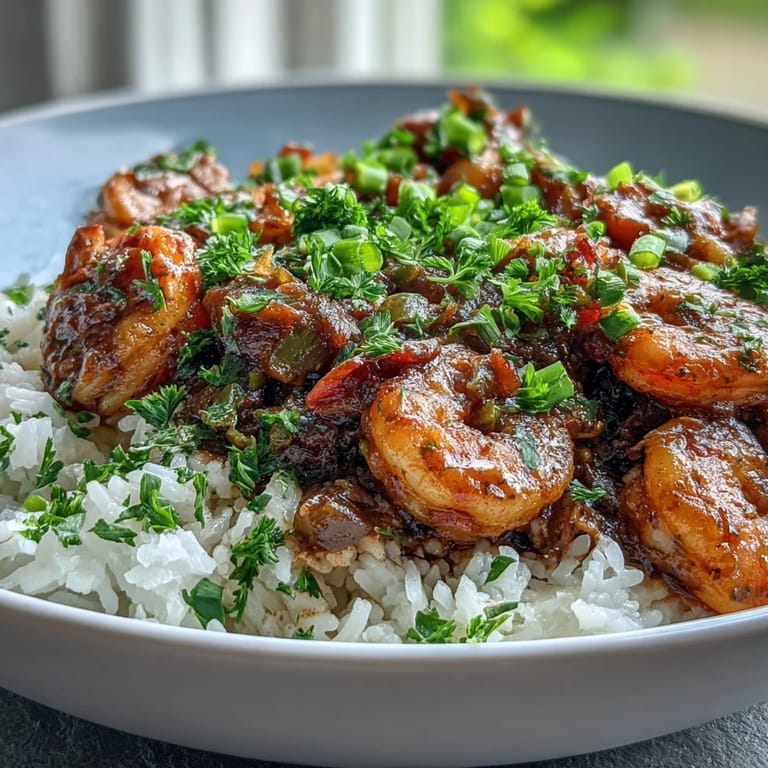
Save This dish has a way of turning an ordinary dinner into something memorable, and once you get the hang of the roux, you will find yourself making it again and again. There is something deeply satisfying about creating bold, comforting flavors from scratch, and sharing a bowl of étouffée with people you care about never gets old.
Recipe FAQs
- → What makes a traditional étouffée authentic?
Authentic étouffée starts with a dark roux cooked to chocolate color, the Cajun holy trinity of onions, bell peppers, and celery, and fresh shrimp or crawfish simmered in a seasoned stock. The sauce should be thick and velvety, coating the back of a spoon, with deep, developed flavors from slow cooking.
- → How do I prevent the roux from burning?
Stir the roux constantly over medium heat, adjusting the temperature as needed. Watch closely as it approaches the desired color—dark roux can go from perfect to burnt quickly. If you see black specks or smell acrid notes, start over. Using a heavy pot helps distribute heat evenly.
- → Can I make étouffée ahead of time?
Yes, étouffée actually improves after sitting overnight as the flavors meld together. Store in an airtight container in the refrigerator for up to 3 days. Reheat gently over low heat, adding a splash of stock or water if the sauce has thickened too much.
- → What proteins can I substitute for shrimp?
Crawfish are traditional and work beautifully. For other variations, try chicken thighs cut into pieces, andouille sausage for a smokier version, or a combination of both. Vegetarians can use mushrooms or tofu, though the flavor profile will change slightly.
- → How dark should the roux be for étouffée?
For classic étouffée, aim for a dark brown roux the color of milk chocolate or peanut butter. This usually takes 15-20 minutes of constant stirring. The darker the roux, the richer and more complex the flavor, though it provides slightly less thickening power than lighter roux.
- → What's the difference between étouffée and gumbo?
While both use roux and the holy trinity, étouffée is thicker with more roux and typically features one main protein, served over rice. Gumbo has a thinner broth, often contains okra or filé powder, and usually includes multiple proteins like seafood, chicken, and andouille together.